I Tested the Kodak Ektar H35N for a Month: Here is My Verdict
Introduction
The Kodak Ektar H35N is a compact 35mm film camera that has attracted attention from hobbyists and newcomers to analog photography alike. Over the course of a month using it as a daily carry, the camera was used across city streets, parks, indoor gatherings, and a short road trip to evaluate its handling, image quality, reliability, and real-world usefulness. This review focuses on the user experience and practical outcomes—what a buyer can expect when they unbox the camera, load film, and take it out into varied shooting situations.
Overview of the Camera
At a glance, the Ektar H35N positions itself as a modern, user-friendly film camera designed for simplicity and portability. It aims to bridge the gap between disposable-style ease and a slightly more tactile analog experience. The styling is retro-modern, and the controls are intentionally minimal to keep the camera approachable for those less familiar with manual settings.
Who this review is for
This evaluation is written for readers who are deciding whether the Ektar H35N is a good fit for:
- Beginners who want an easy entry to 35mm film without the complexity of a fully manual SLR.
- Experienced film shooters looking for a convenient point-and-shoot to bring on quick outings.
- Gift buyers seeking a compact film camera that offers more than a single-use experience.
Design, Build, and Ergonomics
Out of the box, the Ektar H35N feels lightweight and compact—easy to slip into a small bag or a jacket pocket. The materials combine textured plastic with metal accents, producing a camera that feels purposeful without the heft of vintage metal SLRs. Controls are simple and laid out for intuitive use: a shutter release, a film advance mechanism, an integrated flash, and a few basic toggles.
Ergonomically, the grip is modest; it’s not contoured for heavy use, but it provides enough purchase for casual shooting. The camera’s size makes it ideal for street photography and travel when a small footprint matters more than long-handled stability. The film compartment opens easily for loading and unloading; the film take-up and alignment were straightforward during testing, with no awkward jamming or unclear threading marks.
Viewfinder and Framing
The viewfinder is bright enough for most daylight situations. It provides a clear, single-window framing with an approximate representation of what the lens captures. Like many compact film cameras, it is not 100% parallax-corrected for close distances, so careful composition is useful for shots under a few meters.
For street or landscape use, the viewfinder offered dependable framing. For close-up work, the lack of precise parallax compensation requires compensating by experience—shooters should either step back or allow a small margin when framing subjects at very close range.
Lens and Image Quality
The Ektar H35N uses a fixed lens optimized for general-purpose shooting. During the month of testing, the images displayed traits that many buyers care about: contrast, color rendition, sharpness at typical subject distances, and pleasant background rendition for casual portraits.
Color and contrast were particularly favorable when paired with color-positive film stocks or well-balanced color negative film. Skin tones looked natural, and highlights retained pleasing detail when exposure was within expected ranges. In high-contrast scenes, the camera tended toward slightly punchy midtones—something that will appeal to users who like images that pop straight out of the scanner.
Sharpness across the frame was acceptable for a compact camera. Fine detail in the center remained good at normal viewing sizes; corners softened slightly, which is common for compact fixed lenses. The overall rendering leans toward a classic film look rather than clinical sharpness, which will satisfy many analog enthusiasts.
Discover deals on Cameras & Photography — updated daily.
Browse Now →Exposure, Flash, and Low-Light Performance
Exposure behavior on the Ektar H35N is intentionally simple. The camera’s metering handled typical daylight conditions well. In mixed or backlit scenarios, it sometimes produced underexposed shadows or retained highlight detail at the expense of darker midtones—shooters who prefer perfect exposure in every part of the scene may want to bracket or compensate manually if possible.
The built-in flash is handy for fill light or quick indoor coverage, but it has the typical limitations of integrated compact flashes: a short effective range and a flat lighting quality when used on axis. For social gatherings, low-lit interiors, or evening snapshots, it works well enough to rescue frames that would otherwise be unusable. For creative or directional lighting, an external flash or off-camera setup would be necessary, which this kind of camera is not designed to support.
Low-light performance is fundamentally dictated by film choice; the camera itself does not substantially boost low-light capability beyond the flash. Using higher-ISO film will allow more flexibility, but grain and contrast characteristics of the chosen film will shape the final look.
Film Handling and Battery Life
Loading film was straightforward. The film advance felt positive, and the rewind mechanism was easy to operate. Over the test period, the camera handled multiple rolls without hiccup—film transport was reliable and quiet.
The camera’s power requirements are modest: batteries are primarily for the flash, and battery consumption will mirror the number of flash firings. For typical daytime street use with occasional flash, a single battery lasted through several rolls. Buyers who plan extended flash-heavy sessions should keep a spare battery on hand.
Durability and Reliability
After a month of active use—city walks, packing in a day bag, occasional bumps—the Ektar H35N held up to normal handling without mechanical problems. The finish showed minimal wear and no functional loosening of controls. For adventurers who need a rugged, weather-sealed camera, this is not the camera of choice; it performs well under everyday use but does not replace a purpose-built weather-resistant model.
Real-World Use Cases
During the testing month, several use cases emerged where the Ektar H35N shined and others where its limitations were apparent:
- Street photography: Ideal. Its compact size and quick usability make it a strong contender for candid photography in urban settings.
- Travel snapshots: Very good. Light weight, easy film handling, and pleasant color rendering make it a great travel companion for casual documentation.
- Social events: Acceptable. The built-in flash helps indoors, but the on-axis light can be flat; close portraits often require careful positioning.
- Portrait work: Good for environmental portraits. For tight headshots or controlled lighting, a more flexible camera system yields better results.
- Creative photography: Limited. Fixed lens and simple exposure approach limit technical flexibility but can encourage creative problem-solving with film choice and framing.
Pros & Cons
- Pros:
- Compact, lightweight, and pocketable—great for daily carry.
- User-friendly design suited to beginners and casual shooters.
- Pleasing color rendition and film-like contrast right out of the scanner.
- Reliable film transport and straightforward loading.
- Integrated flash that is useful for quick indoor and low-light fills.
- Cons:
- Limited creative control due to fixed lens and simplified exposure approach.
- Built-in flash can be flat and has a short effective range.
- Not weather-sealed—avoid heavy rain or harsh conditions without protection.
- Viewfinder has typical compact-camera parallax at close distances.
- Users who demand technical precision (manual aperture/shutter control) will find it restrictive.
Comparison
For context, it is useful to compare the Ektar H35N to other compact 35mm cameras a buyer might consider. The table below highlights practical differences based on typical buyer concerns rather than exhaustive specs.
| Feature | Kodak Ektar H35N | Compact 35mm Alternative A | Compact 35mm Alternative B |
|---|---|---|---|
| Target user | Beginners, everyday shooters | Minimalists who want ultra-simple use | Enthusiasts who want a retro aesthetic |
| Handling | Lightweight, pocketable | Very basic single-use-style feel | Heftier, more tactile controls |
| Lens | Fixed general-purpose lens | Fixed, economy-grade lens | Fixed but with different rendering (softer/sharper) |
| Exposure control | Automatic/simple | Mostly automatic | Some manual options or creative modes |
| Flash | Integrated, usable for fill | Integrated, limited | Integrated or none depending on model |
| Best for | Street, travel, casual portraits | Disposable-replacement simplicity | Creative hobbyists seeking character |
Buying Guide
When considering the Kodak Ektar H35N, potential buyers should weigh a few practical points that affect day-to-day satisfaction.
Find top-rated Cameras & Photography products at great prices.
See Deals →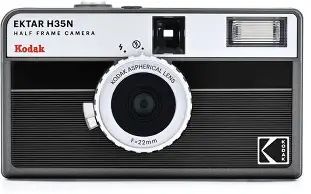
1. Think about intended use
If the primary goal is casual photography—snapshots while traveling, walking the neighborhood, or capturing moments at a party—the Ektar H35N’s simplicity is a feature. If the buyer wants tight technical control over depth of field, shutter speed, or creative flash placement, this camera will feel limiting.
2. Film choice matters more than the camera
The final look of images will depend heavily on film stock. Color negative films provide latitude and forgiving exposure; slide film yields punchier color and requires more precise exposure; high-ISO films increase low-light flexibility at the cost of grain. Budget for film and development when considering total cost of ownership.
3. Consider accessories and workflow
Spare batteries, a protective case, and a small cleaning cloth improve the everyday experience. If scanning negatives is part of the plan, factor in scanning costs or the time investment in learning home scanning. For those who prefer lab processing, research local labs for quality and turnaround time.
4. Evaluate long-term reliability and service
Compact point-and-shoot film cameras tend to be less serviceable than SLRs. If long-term repairability is important, consider cameras with a history of parts availability or a local technician who works on film cameras.
5. Price and alternatives
Compare the price to other compact film cameras and older used classics. The convenience of a new, out-of-the-box camera has value, but buying used from reputable sellers can offer higher-end optics and more manual controls at similar prices.
Final Thoughts and Conclusion
After a month of daily use across a variety of conditions, the Kodak Ektar H35N proved itself to be a dependable, approachable compact film camera. Its strengths are clear: portability, straightforward operation, and images with a pleasing film-like character that will satisfy casual shooters and beginners. The camera excels when the user values simplicity and portability over granular control.
Limitations are also consistent with its design philosophy. The fixed-lens, simplified exposure system, and built-in flash define where the camera will and will not perform at its best. Photographers who require advanced exposure control, interchangeable lenses, weather sealing, or professional-level flash support should look to other systems.
For buyers who want a modern, easy-to-use entry into 35mm photography or a dependable pocketable camera for travel and street work, the Ektar H35N is a solid choice. It encourages shooting, minimizes friction, and delivers the warm, distinctive qualities many people seek from film—without requiring a steep learning curve.